
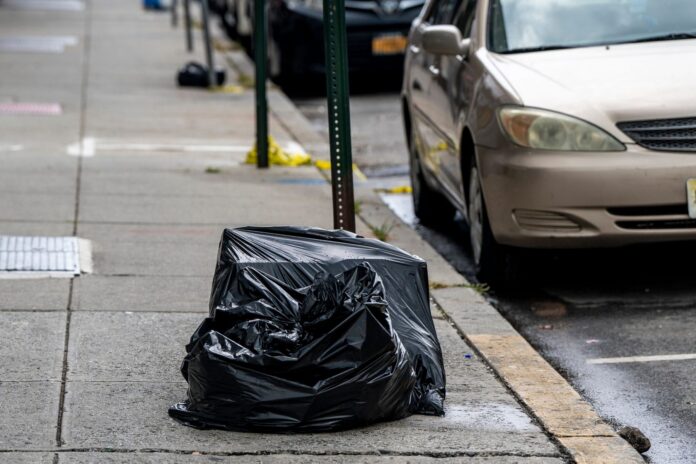
New York City is rolling out a “trash revolution” with a plan to swap open garbage bags for bins on our sidewalks. While cleaner streets sound like a win for everyone, Streetsblog NYC warns this shift could turn our narrow walkways into a nightmare for disabled New Yorkers. Huge mounds of bags already force people with disabilities into traffic, but unbroken lines of bins might do the same thing in a different way.
The city’s new Citywide Containerization Program requires residential buildings to use individual bins or stationary Empire Bins depending on their size. The goal is to clear the mess, but if the city doesn’t design this with accessibility in mind, they risk replacing one barrier with another. For blind residents using canes or those in wheelchairs, rows of bins can block curb cuts and shrink the clear path needed to move safely.
The Danger of Cluttered Sidewalks
The Streetsblog report highlights that many residents see trash piles as just an eyesore, but for the disabled community, it is a matter of life and death. These obstacles create unpredictable hazards that lead to injury. Unbroken lines of bins interrupt the continuous building lines that help low-vision New Yorkers get through the street. Narrow sidewalks in densely populated neighborhoods mean clusters of bins leave insufficient room for mobility devices to pass.
Overturned bins, loose lids, and misaligned containers can easily block bus stops and curb cuts. The report notes that the program can serve as an “accessibility revolution” only if leaders prioritize safety over just aesthetics. Without careful planning, the city risks creating new hazards that are just as dangerous as the old trash mountains they aim to replace.
A Call for Better Design
We love a cleaner street, but not at the cost of leaving disabled neighbors behind. The city has a chance to fix this if they listen to the concerns raised by advocates and community members. Placing bins in a way that blocks curb cuts is a failure of basic urban planning. New Yorkers deserve a city that works for everyone rather than only those who can walk without assistance.
The MTA is also looking to improve accessibility with federal funding, as MTA Chair Janno Lieber noted in a recent WNYC appearance. Lieber said, “I think we have more confidence that the existing projects will be funded, and we would like to now start pursuing money for new big projects.” He added, “But the bigger issue is is a mandate in Congress right now to stop this anti-city campaign that has been in effect in Congress and in Washington for the last couple of years.”
Just as the MTA fights for signal upgrades and better access, the Department of Sanitation must ensure the new bins do not trap people in their homes or on the road. Tom Wright of the Regional Plan Association emphasized that “If through the new Congress there is money for mass transit, the IBX ought to be at the front of the line because it is such an excellent project.” The same logic applies to street design: if we have the money and the will, we must make sure the streets are safe for all.
This is opinion and commentary from the RapForMayor team.