
New York City buses are supposed to get faster, but the data shows a different story on the ground. The M42 route down 42nd Street has taken home the 19th annual Pokey Award for the second year in a row.
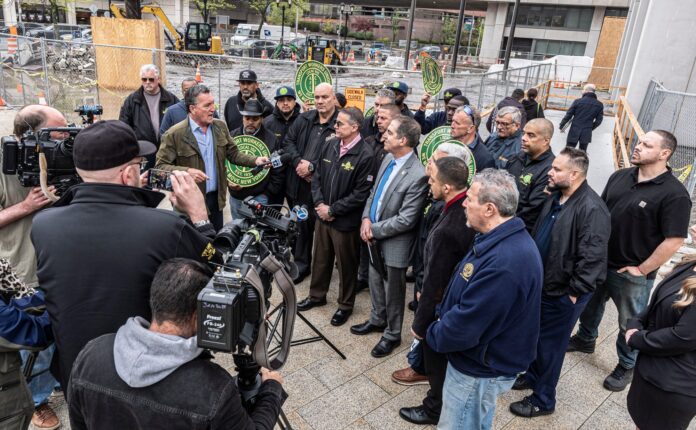
Advocates held their ceremony in Downtown Brooklyn on Thursday morning to highlight the persistent speed issues. The M42’s average speed dropped to just 4.78 mph, which is barely faster than walking. Critics argue that this decline is unacceptable when the city claims it is improving service.
Awarded for Slow Service
From the Hudson River to the East River, the M42 runs through the Crossroads of the World. Natasha Elder, NYPIRG’s regional director of equity and resiliency projects, pointed out the irony of the situation. “The M42 has managed to do something no bus rider wants to see, get even slower,” she said, according to amNewYork. Elder stated that it is unacceptable to lose speed when progress is anticipated, yet winning the Pokey Award for two consecutive years is already bad enough.
Riders face daily uncertainty with buses that crawl through traffic or fail to show up on time. Elder stated that “New Yorkers shouldn’t have to plan their lives around buses that crawl through traffic or leave them guessing when the next one will show up.” The award ceremony aims to draw attention to the fact that New York City remains the slowest bus network in the country.
Administration Response
Despite the criticism, the Mamdani administration insists it is working tirelessly to fix the system. NYC Department of Transportation Commissioner Mike Flynn stated in a declaration that the administration is dedicated to delivering fast and reliable, world-class bus service to New York City. This week, the city will complete its first bus rapid transit-style route on Flatbush Avenue, a feature identified by advocacy groups that is included in the plan’s expansion.
Not every route is struggling, however. Nabila Miah, NYPIRG’s student representative studying at City College, noted during the same ceremony that the Q27 earned the Mazel Award for a speed increase of 0.91 mph since the redesign took effect. Miah said the Q27’s award shows there is “reason to believe that improvement is possible.”
The Path Forward
The MTA is currently reexamining its approach to bus dispatching to ensure vehicles leave depots on time. During peak service on a typical weekday, approximately 5,000 buses run from 27 depots across all five boroughs. The goal is to optimize staging areas and improve traffic signal timing outside depots to get hundreds of buses onto the street faster within a two-to-three-hour window.
Commissioner Flynn acknowledged that more than a million daily riders are currently stuck in traffic, showing up late to work, missing appointments or time with their families and friends. The city and state are partnering with the MTA to address these bottlenecks. While the M42 continues to lag, the focus remains on implementing new technology and reviewing operator movement throughout facilities to boost overall speeds.
This is opinion and commentary from the RapForMayor team.

