
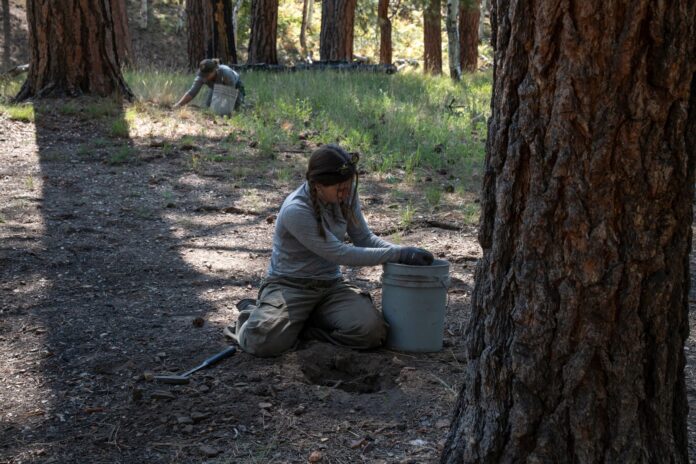
Scientists are digging into the dirt at Green-Wood Cemetery in Brooklyn, searching for a secret world that could help save the planet. Since last spring, Whitney Bauck and Lauren Wilson have used teaspoons to sift soil and catalog unknown fungal species. This work is a critical effort to understand the natural technology that captures a massive chunk of global carbon emissions, going beyond botany.
While billions of dollars flow into man-made carbon capture machines, nature has been doing the heavy lifting for millions of years. Fungi act as the early root systems for land plants and now handle one-third of worldwide emissions from fossil fuels.
The connection between fungi and plants is ancient and essential. Early fossil evidence shows that fungi acted as root systems when land plants evolved from their rootless aquatic ancestors. Without these organisms, most plants could not survive because they depend on fungi for water and nutrients. Michael Van Nuland, data science lead for SPUN, warned that losing these organisms could trigger catastrophic environmental shifts.
Van Nuland stated that if we start losing fungi, according to Gothamist, “really, really serious collapse situations could start happening.” He calls the fungus a natural technology that has evolved to move carbon from plants into the soil. The team at Green-Wood believes that healthy soils are chock-full of these organisms and that protecting them is vital for the future of the city’s green spaces.
Hidden Species in Plain Sight
The research team has performed about a half-dozen digs, mostly in Brooklyn’s largest graveyard, to gather soil cores. DNA from hundreds of fungal species is present in a single teaspoon of cemetery soil. Bauck explained that when the lab processes the data, “it will be hundreds of fungi there.” This hidden biodiversity is crucial for establishing a database to manage invasive species and protect native ones.
Wilson noted that it is hard to manage an ecosystem if you do not know what lives there. The goal is to weed out invasive threats while ensuring Green-Wood continues to thrive under climate stress. Hundreds of species not previously located in New York City have been found by researchers, proving the city holds secrets that could help fight climate change.
This is opinion and commentary from the RapForMayor team.