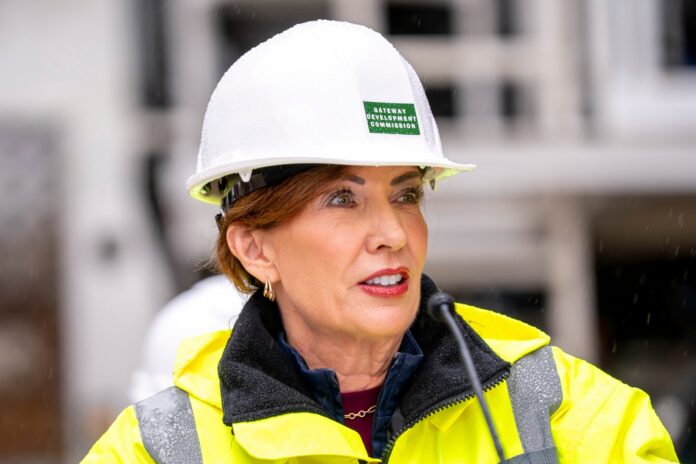
Childcare costs are crushing New York families, and the race for governor is finally hitting this pain point hard. More than 1 million people have left the state since 2010, and the high cost of living is a major driver. Democratic Governor Kathy Hochul and her Republican opponent, Bruce Blakeman, present contrasting approaches to halt the decline.
The Squeeze on Parents and Providers
Taylor Loreman runs The Clubhouse Day Care Center in Willsboro, Upstate New York, and she knows the struggle firsthand. Her center lost two families earlier this year when a government assistance program stopped during a budget crunch. One parent stayed home for three months caring for their child, while another household depended on family members. Loreman told Gothamist that raising rates is not an option because families simply cannot pay more.
“If we make our rates go up any higher, it’s going to be an even harder struggle on our parents, and then it’s a harder struggle on us just keeping things afloat,” Loreman said. The reality is stark: there are parents making okay money, but they still cannot make it work. The Empire State Campaign for Childcare states that two children need an average of $35,000. This is the “New York State of Unaffordability” that a new WNYC and Gothamist podcast series is highlighting.
Hochul’s Expansion vs. Blakeman’s Tax Plan
Governor Hochul aims to guide the state toward genuinely universal childcare. Collaborating with New York City Mayor Zohran Mamdani, she funded spots for 2-year-olds, enabling 2,000 children to begin care this fall. Her administration also expanded the Child Care Assistance Program, or CCAP, by raising income thresholds to bring more people in. But demand soon outstripped the available funding, causing a shortfall that hurt providers like Loreman.
Blakeman, the Nassau County Executive, is taking a different angle. He proposed eliminating income taxes for most New Yorkers, claiming the existing tax load is causing residents to leave. A Tuesday release from an Empire Center for Public Policy survey revealed 64% of registered voters support ending the state’s earnings tax. The poll shows support cuts across party lines, with 51% of Democrats backing the idea.
“Regular New Yorkers are fed up and want lower taxes,” said Zilvinas Silenas, president of the Empire Center. Florida’s example could be followed by Albany, or it could continue observing New Yorkers depart for Florida.Supporting his argument, 67% of those surveyed stated they receive poor value for their tax payments.
The Take: Supply and Demand Over Subsidies
Here is the hard truth: you cannot subsidize your way out of a broken system if the underlying costs are too high. Hochul’s approach relies on throwing more state money at the problem, but we saw how quickly that ran out. The demand for vouchers exploded, and the budget couldn’t keep up. That is a classic government failure. When you tell providers they can’t raise rates and you don’t have enough money to cover the gap, the result is a shortage of care and frustrated parents.
Blakeman’s tax plan hits the root cause. The United States sees New York bearing the largest combined state and local tax load. When you take that much money out of a family’s paycheck, they have less to pay for childcare, rent, and groceries. It is no surprise that 1 million people have fled the state. Lowering taxes leaves more money in the pockets of working parents and allows the market to function. As Silenas noted, the social contract is breaking down because people pay too much and get too little.
Rural areas face unique challenges too. “In a more rural area, there is going to be more family childcare, fewer centers, and longer travel,” as one source noted. A blanket subsidy program often misses these nuances. A tax cut, however, gives every family the flexibility to find the care that works for them, whether it is a center in the city or a family provider in the country.
We need leaders who understand that affordability starts with what you keep in your wallet, not just what the state gives you. Hochul’s plan sounds good on paper, but it has already hit a wall. Blakeman is offering a way to fix the math for the average New Yorker.
The next major event is the gubernatorial election on November 3, 2026.
This is opinion and commentary from the RapForMayor team.