
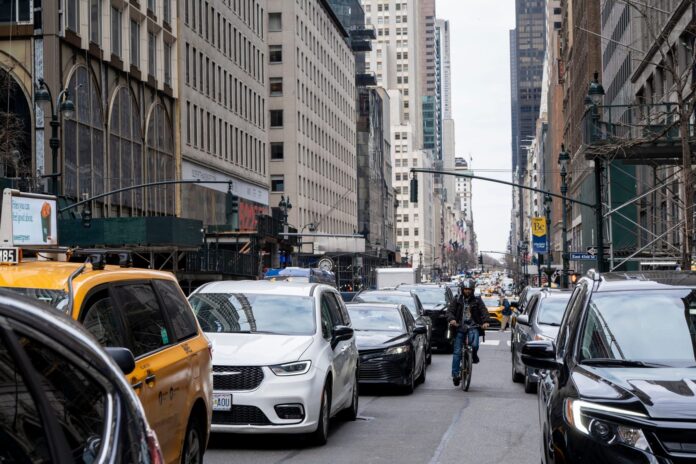
New York City has finally launched its first bus rapid transit corridor on a section of Brooklyn’s Flatbush Avenue. Mayor Zohran Mamdani’s administration cut the ribbon on Tuesday, Nov. 17, 2026, for a redesign that prioritizes moving tens of thousands of bus riders over private cars. The project covers nearly two miles between Grand Army Plaza and Livingston Street, transforming a corridor that previously saw buses crawl at speeds as slow as 4 mph.
This move removes 41 parking spaces and bans passenger vehicles from the center lanes 24 hours a day. While the city touts faster commutes for the 55,000 daily riders on this stretch, the changes have sparked friction with local business owners who fear losing access. According to Gothamist, six concrete-protected boarding islands were added while most car traffic was pushed into a single lane in each direction.
The Speed Gain for Riders
The primary goal of the redesign is to quicken the speeds of the B41, B67, B45, and B103 bus routes. amNewYork reports that double-parked cars, congestion, and the time required to pull in and out of curb stops forced buses to contend with delays before these changes. Streetsblog NYC states that bus lanes are now separated from general traffic lanes by the design to eliminate those delays. City Department of Transportation Commissioner Mike Flynn stated that these fully-protected, center-running bus lanes benefit more than 55,000 daily bus riders on this section of Flatbush, as well as 120,000 riders along the entire corridor.
Riders on the ground have already noticed the difference. The installation of fresh bus shelters, benches, and leaning bars at every single boarding island aims to make the wait more comfortable. Crews installed 36 new bike racks on the street to support alternative transit according to Gothamist.
Merchant Pushback and Safety Concerns
Not everyone celebrates the removal of parking and car lanes. The owners of Antonio’s Pizzeria and El Gran Castillo complained about the project in August, worried about the impact on their customers. Despite complaints, DOT research indicates that most people shopping on this section of Flatbush arrive by foot or transit, according to Streetsblog NYC.
Safety remains a key concern for some pedestrians. Nadine Barry, 45, worried that cars would crash into the new boarding islands. “I think pedestrians…are the first priority,” she said. The city argues that the new layout actually makes the street calmer. Flynn explained that the changes will help Flatbush feel less like a busy highway and more like a calm neighborhood street that’s easier to cross.
The Stakes for the Future
Since Mayor Mamdani assumed office at the start of the year, Gothamist reports that no bus lane completion has been as ambitious as this project. The new lanes connect to the existing Livingston Street busway, creating about 1.5 miles of dedicated red lanes in each direction. Gothamist reports that officials plan to eventually implement similar redesigns that give buses priority all the way to Kings Plaza. In an effort to make the traffic circle at Grand Army Plaza more pedestrian-friendly, the transportation department is also considering an overhaul, according to Gothamist.
Mayor Mamdani emphasized the long-term vision in a statement. “Flatbush Avenue is the foundation for the future of bus service in New York City,” Mamdani said in a statement. amNewYork reports that he added that the administration is building the fast, reliable public transit that New Yorkers deserve after years of waiting.
This is opinion and commentary from the RapForMayor team.

